Alvyn Dreqixty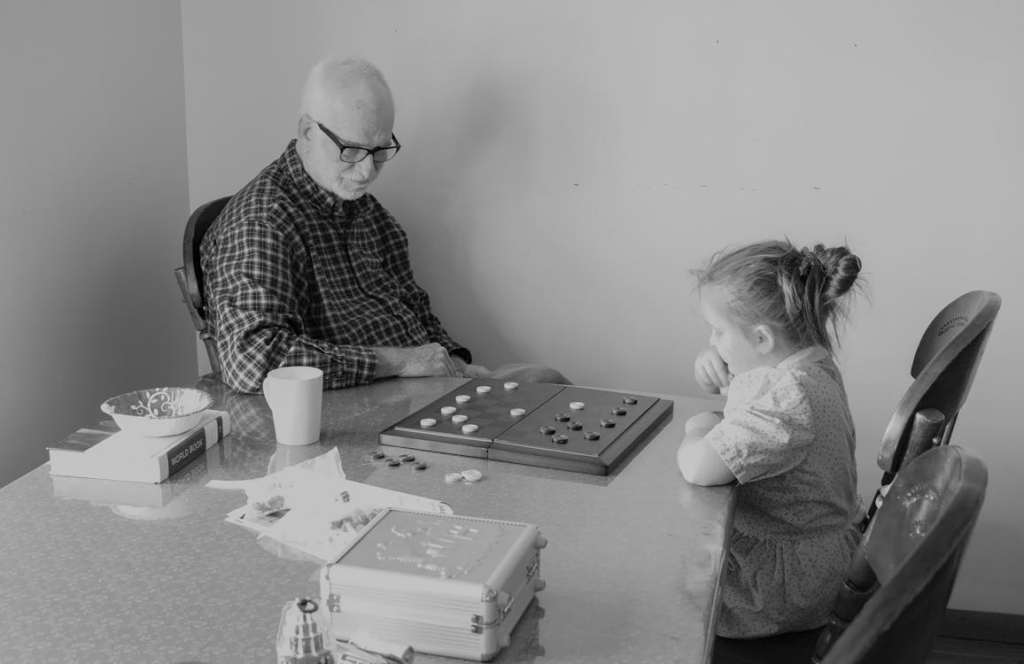
Most people now reach for a glowing screen when they want mental stimulation. Yet small wooden boards and printed diagrams continue to hold attention for long stretches and real enjoyment. Each game has very short rules, and the amount of space available on the small tables used to play is very limited compared to the infinite scrolling feed of an application’s home page. Players focus and engage for a long period of time while playing these games on a small grid.
Simple Does Not Equal Easy
Old board games use basic shapes and predictable grids, but they’re not easy. “Simple” describes structure, not mental effort. That’s why traditional logic games like draughts, chess, and Go still require intense focus. These games use diagonal, linear, and symmetrical mechanics that ask players to plan, adapt, and predict and do it fast. The rules are few, but the combinations multiply every turn. That’s the real challenge. It’s a kind of clarity that modern games often abandon in favor of layers and upgrades.
Pattern Recognition Still Leads the Way
The most successful players at board games do not guess; they recognize patterns. A given configuration on the board calls to mind past configurations, and their response occurs without the calculation of each individual step. In particular, pattern recognition becomes apparent in games with fixed board configurations and repetitive moves. As a player experiences the board repeatedly, the board helps teach the player over time. Contemporary applications obscure this by providing an endless array of novelty to the player. However, if the board does not change, the player will develop recognition skills as opposed to simply developing memorization skills. Therefore, success in classic board games feels much like the ability to acquire skills as opposed to consuming content.
Attention Doesn’t Fragment
Board games require total attention from the player. Players are not switching back and forth between windows for chat, notifications, or quests. No pop-up messages, countdown timers, or other interruptions occur. It is always the same board, the same turn. Players have complete visibility of the board and the problem in front of them. It is not nostalgia; it is focused cognition that allows these games to provide the player with clear thinking. In addition, by eliminating distraction from the player’s mental bandwidth, board games allow players to apply more concentrated mental effort to make each decision. Each decision carries weight, since the player is not distracted by animations or filling meters. Board games do not fragment your mental bandwidth; they concentrate it.
Immediate Momentum Shifts
Logic-based board games can rapidly change the balance of power between players. An oversight made by a player can reverse the advantage held by the other player. These types of games tend to be short but very dense. Early advantages do not guarantee victory. Every position can change in value based on the initiative of each player. This type of dynamic tension fosters focus. Players are not simply making moves; players are identifying potential pressure points. Rapid change in momentum encourages players to be attentive and responsive, as opposed to simply being able to plan. Random events or surprise items are not needed in classic games to introduce uncertainty. The board itself provides the necessary uncertainty.
Simple Design Allows for Rapid Gameplay
Many modern applications delay the start of gameplay by including tutorials, resources to unlock, and narrative pacing that takes several minutes before allowing players to actually make decisions. Logic-based board games skip all of that. These games can be loaded instantly, and gameplay begins immediately upon loading. This is important when time is limited. For example, when you want a fast game that requires thinking, you can fire up a couple of quick rounds of checkers. No long tutorial, no grinding, just the pure read, trap, and “one more game” loop. All of the cognitive exchange occurs in real-time on a single board.
Via Pexels
Tactile Gameplay Creates Stronger Memories
For many players, a physical board creates stronger memories compared to playing on a screen. This is a result of sensorimotor memory. Moving pieces around manually, feeling the pieces click into place, and visually surveying the space of a physical board create a much deeper level of retention. Even digital representations of simple board games retain some of the tactile aspects of the physical board, including clarity and visual stability. There is no motion blur, camera movement, or particle effects to distract the player from the board. The player can view the entire board at once. This eliminates friction between the player’s intentions and actions. This is why players may remember specific positions on the board long after the game is finished and these moves become their “power plays”.
No Hidden Variables
Most modern games rely on systems that players can’t see, such as random seeds, hidden stats, or dynamic difficulty. Classic board games show everything. All data is visible. The only unknown is the opponent’s next move. This changes how you think. You don’t prepare for surprises. You scan for inevitabilities. You don’t try to predict randomness. You try to avoid deterministic traps. This full-transparency model reduces frustration and builds trust in the ruleset. It creates a strategic mindset instead of a reactive one.
Replay Value Isn’t Tied to Content
App-based games often equate replayability with more content, new maps, characters, and updates. Classic board games rely on situation complexity. The board doesn’t change, but the move trees do. That’s why these games don’t get stale even when the pieces and layout never change. Replay value here means problem-solving under pressure, not accessing new assets. This simplicity supports infinite play with finite rules. The fun is in how the same rules respond to different decisions.
Popularity Returns Because the Model Works
The recent trend in classic logic games is not a revival. It’s a reversion. Players are cycling back to formats that strip away friction. They want clarity, pace, and mastery. This isn’t limited to older generations either. Younger players increasingly pick up fast, head-to-head games with complete information and clear stakes. Simple board games deliver that. Apps inspired by them, like abstract strategy puzzles and minimalist mobile games, often succeed by copying their structure. The interest never left. It just waited for fatigue with clutter to peak.
Conclusion
Classic logic games remain relevant because they deliver structured decision-making without excess. Their simplicity eliminates distractions, letting players focus on direct problem-solving. Every move has visible consequences. There are no upgrades, no hidden mechanics, no waiting. Just position, timing, and recognition. These games don’t persist because of nostalgia, they persist because they still work. In a landscape of layered systems and fragmented attention, a clear board and a short match offer a rare kind of clarity. They don’t compete with modern apps on features. They compete by reducing everything to the essentials—and that’s often enough.

 Indomal Pelnis






 Bettie Seay
 Noxel Plenthak